
Growing Security
Interpersonal process groups for healing attachment wounds and changing relational patterns at the root
You're in a difficult season. And old patterns keep showing up.
Maybe you're a parent hearing your own parent's voice come out of your mouth. Maybe you're single and keep choosing the same unavailable partners. Maybe you're caring for aging parents and feeling the weight of intergenerational expectations. Maybe you're divorcing and questioning everything you thought you knew about relationships.
You're doing the work—therapy, reading, trying to grow—but something still feels stuck. The same relational patterns keep appearing, just in different contexts.
You don't need surface-level advice. You need space to understand why these patterns exist and how to truly change them.

Healing intergenerational patterns shapes the legacy we pass forward
What is Growing Security?
Growing Security is my approach to interpersonal process group therapy—a therapeutic space where the work happens through relationship, not lectures or worksheets.
In a Growing Security group, you'll:
Understand how early attachment experiences shape your current relationships
Explore the patterns you're repeating (and the ones you're desperately trying to avoid)
Work through unresolved feelings about your family of origin
Build genuine security in yourself so you can show up differently in relationships
Process major life transitions in real time with others who understand depth work
The transformation happens by experiencing how you relate in the group. You'll show up as yourself, share what's real, and discover how the ways you relate in the group mirror the ways you relate everywhere else. That's where the deepest change happens.
This isn't a support group. This isn't a skills-based class. This is depth work—the long game of changing relational patterns at the root.

Process groups welcome people across different life stages
This approach is for you if:
✓ You're navigating a major life transition (new parent, divorce, empty nest, relationship changes, caring for aging parents)
✓ You catch yourself repeating patterns and want to understand why
✓ You're tired of surface-level advice and ready for real transformation
✓ You want to heal intergenerational wounds, not just manage them
✓ You have the bandwidth for deeper work (not in crisis or survival mode)
✓ You're willing to be vulnerable and do the uncomfortable work of growth
Growing Security groups welcome:
Parents (especially those healing while raising children)
Singles working on relationship patterns
People in relationship transitions (dating, divorcing, partnering)
Adult children caring for aging parents
Anyone wanting to break intergenerational cycles
LGBTQIA+ individuals (all groups are affirming and inclusive)
This work is NOT for you if:
✗ You're in acute crisis or survival mode (you need stabilization first)
✗ You're looking for quick fixes or behavioral techniques
✗ You're not ready to examine your own story and relational patterns
What makes Growing Security different?
Most therapy groups focus on a specific problem or skill. Growing Security groups focus on you—your patterns, your wounds, your capacity for secure relating.
Here's what that looks like:
Instead of: "How do I fix my relationship with [person]?"
We explore: "Why do I keep ending up in this dynamic? What did this pattern protect me from in childhood?"
Instead of: "My [parent/partner/child] won't change"
We explore: "What would it mean for me to change my part of this dance? What am I afraid of losing?"
Instead of: "I feel broken/defective"
We explore: "Where did I learn that my worth depends on being perfect? What would it mean to let myself be human?"
This is the long game. You're not just managing symptoms—you're changing the relational patterns you carry forward.

The work happens through relationship - not lectures or worksheets
My Approach: Modern Analytic Group Therapy
I facilitate Growing Security groups using a Modern Analytic approach, which means I'm not here to tell you what to do or fix you. I'm here to help you understand yourself deeply, so you can make conscious choices instead of repeating unconscious patterns.
In Modern Analytic groups:
We work with what emerges naturally in the group
Silence and resistance are welcomed as important communication
The focus is on understanding, not performing or achieving
You learn about yourself by experiencing how you relate in real time
Change happens through relationship, not instruction
I work with people across different life stages and transitions—what connects group members isn't their circumstances, but their readiness to do deeper relational work.
Current Growing Security Groups
I currently offer Growing Security groups on Thursday afternoons and evenings. Each group uses the same depth-oriented approach but serves people at different life stages.
How to Join a Growing Security Group
Step 1: Email me to schedule a free 20-minute phone consultation
Step 2: If it seems like a good fit, we'll schedule 1-3 individual intake sessions to explore whether group therapy is right for you and which group would be the best fit
Step 3: I'll connect you with the appropriate group and, when possible, current members for a trial session
Your Questions Answered
Do I need to have experienced trauma to join?
Not capital-T trauma, no. But if you're human, you've experienced ruptures in early relationships that shaped you. That's enough.
What if my "issue" doesn't sound as serious as others'?
The group isn't about comparing problems. It's about understanding relational patterns—and everyone has them.
Will we give each other advice?
Sometimes people share what's worked for them, but the focus is on understanding your patterns, not fixing you with techniques.
What if I can't make it every week?
Consistency matters in process groups, but life happens. You reserve and pay for your spot even if you have a planned absence, which helps maintain group stability.
Do people in different life stages really help each other?
Yes—the same attachment patterns show up across contexts. A parent's struggle with control and a single person's pattern in dating often have the same roots. The diversity actually enriches the work.
How long is the commitment?
I recommend a minimum 6-month commitment. Many people stay for 1-3 years or longer as they work through layers of patterns.
What's the cost?
$60 per session. Fees typically increase by ~$5 annually.
What does "Growing Security" mean?
Security, in attachment terms, means the ability to trust yourself, tolerate discomfort, regulate emotions, and show up authentically in relationships. It's not something you either have or don't have—it's something you grow over time, especially in relationship with others. That's what we do in these groups.
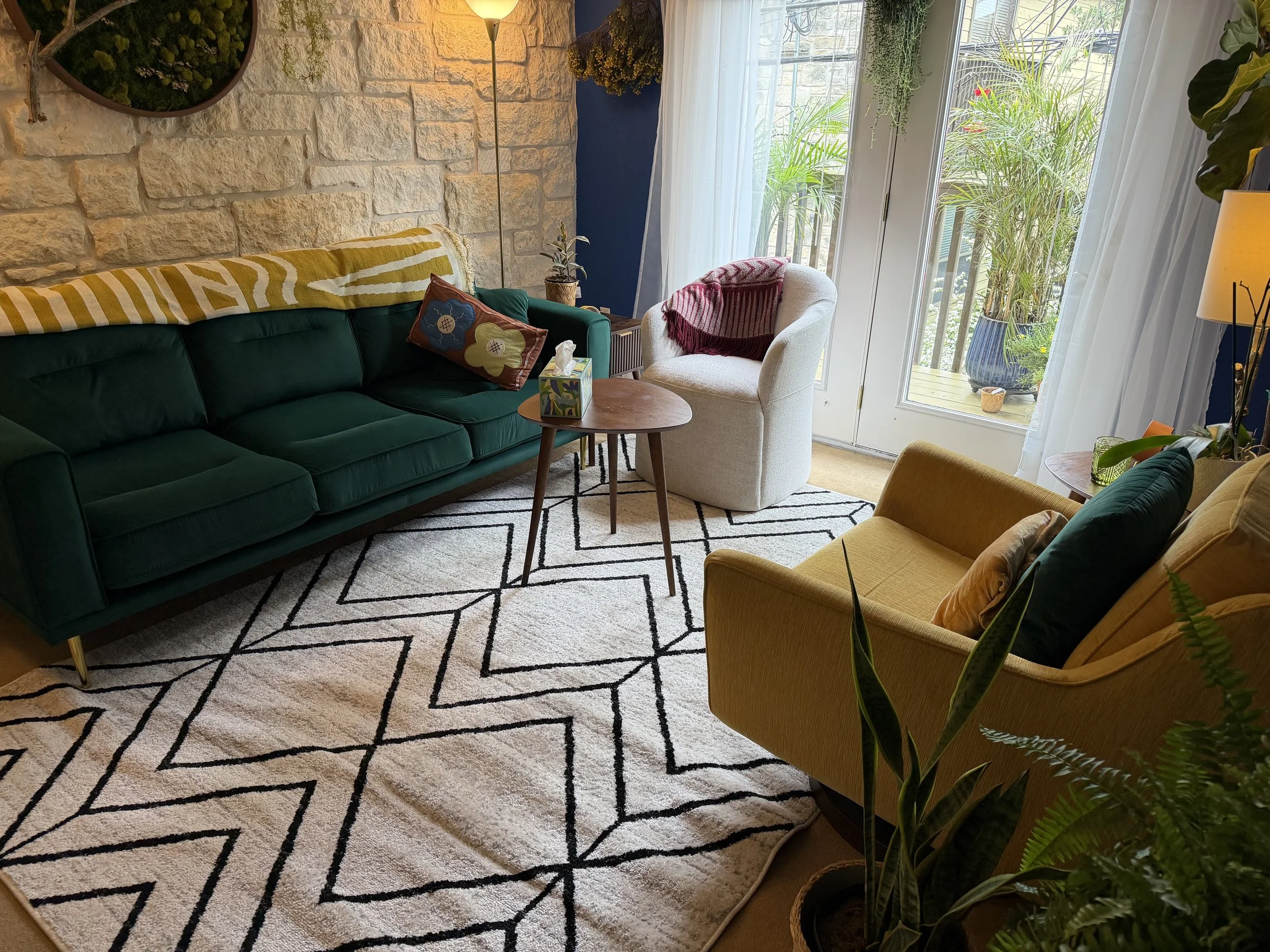
You deserve relationships that feel secure—with yourself and others
The patterns don’t have to continue. You can be the one who changes them.
Growing Security groups help you:
Understand why you do what you do in relationships
Recognize patterns before you're fully caught in them
Tolerate difficult emotions without shutting down or lashing out
Repair ruptures instead of abandoning relationships
Show up as your full self, not who you think you should be
This is how we grow security—together, in relationship, over time.

Sophie Abel, LCSW-S, CGP - facilitating interpersonal process groups in Austin
About the Facilitator
I'm Sophie Abel, LCSW-S, CGP, PMH-C. I specialize in attachment, trauma, and interpersonal process group therapy. I'm a Licensed Clinical Social Worker Supervisor, Certified Group Psychotherapist, and Perinatal Mental Health Specialist.
I'm currently completing advanced training in Modern Analytic Group Psychotherapy through the Center for Group Studies in New York, building on 15+ years of clinical experience.
The "Growing Security" approach comes from my deep belief that we don't heal in isolation—we heal in relationship. And that security isn't something you achieve once and check off a list. It's something you practice, stumble with, repair, and grow throughout your life.